Install Plugins In Photoshop Portable
How to Install Photoshop Extensions Install the Extension Using an Installer.jsx File. Download the extension files from the link in the purchase, and unzip them. Run Photoshop (for Windows user: right click on the PS icon, choose 'Run As Administrator').
You will see a textbox where you enter the path to the Photoshop Plug-Ins folder on your computer, and two options:
1. Install 32-bit plug-in
2. Install 64-bit plug-in
You will not see the second option if your computer cannot use the 64-bit plug-in.
At this stage it is crucial that you choose the correct folder for the plug-in installation otherwise it will either not be installed, or you will get errors. The plug-in must be installed in the Plug-Ins folder of Photoshop because that is where Photoshop looks for plug-ins to load when it starts up.
Portrait Professional will try to detect what version of Photoshop you have installed, and automatically find the Plug-Ins folder for you. However, if you have other versions of Photoshop, including Photoshop Elements, or you have a 64-bit machine, you can manually browse to the Plug-Ins folder of the Photoshop you want to use. Please make sure to check that the installation folder that Portrait Professional gives you is correct for the version of Photoshop that you want to use.
On a Mac, the Photoshop CS6 Plug-In directory is normally:
ApplicationsAdobe Photoshop CS6Plug-InsFor Windows, the Photoshop CS6 Plug-in folder is normally
64-bit plug-in:
C:Program FilesAdobeAdobe Photoshop CS6 (64 bit)Plug-Ins
32-bit plug-in:
C:Program Files(x86)AdobeAdobe Photoshop CS6Plug-InsWhen launching Photoshop, make sure that you launch the Photoshop where you have installed the plug-in.If you launch a different Photoshop, that will not have the plug-in installed, and Portrait Professional won't show up in the menu.
On a Mac, this is usually where to find Photoshop CS6:
ApplicationsAdobe Photoshop CS6For Windows, this is usually where to find Photoshop CS6:
64-bit plug-in:
C:Program FilesAdobeAdobe Photoshop CS6 (64 bit)Free Photoshop Plugins
32-bit plug-in:
C:Program Files(x86)AdobeAdobe Photoshop CS6Photoshop needs to be restarted before it will use a new plug-in. When the plug-in is installed, you can see it in Photoshop by selecting the Filter menu option. Look down the list of filters and at the end will an entry 'Anthropics'. Choose this and you will see it expand to show the Portrait Professional plug-in.
Plug-ins are mini software programs that add features to Photoshop CS6. The Plug-Ins folder is where Photoshop stores all your filters and other plug-in add-ons. A default folder is created when you install Photoshop.
Photoshop CS6 allows you to specify an additional folder to search other than its own Plug-Ins folder. This additional folder may come in handy if you want to keep your third-party add-ons separate from Photoshop’s native plug-ins.
An auxiliary plug-ins directory (not nested within Photoshop’s own Plug-Ins folder) can simplify managing those extra filters, and you can turn off their use (potentially speeding up Photoshop’s load time) by deselecting the Additional Plug-Ins Folder check box in this dialog box.
You can also use this option when you have some plug-ins installed for another application and want to share them with Photoshop without having to make extra copies in your Photoshop Plug-Ins directory.
Here are a couple tips on using plug-ins:
To activate a new plug-ins folder: Select the Additional Plug-Ins Folder check box. In the dialog box that appears, navigate to the folder you want to use and select it. Click Choose. You then need to exit Photoshop and restart the program to activate the new directory.
If you have a plug-in or folder you want to deactivate: Use a tilde (~) as the first character of the plug-in or folder name. Photoshop ignores the plug-in(s) or folder(s) specified. Just remove the tilde from the name to activate the plug-in or folder. This can come in handy if you’re having a program glitch and want to deactivate your plug-ins to troubleshoot whether they’re causing the problem.
Filters: Check the Show All Filter Gallery Groups and names to bring the filter groups, such as Artistic, Brush Strokes, and Sketch, back to the Filter menu, and not just the Filter Gallery.
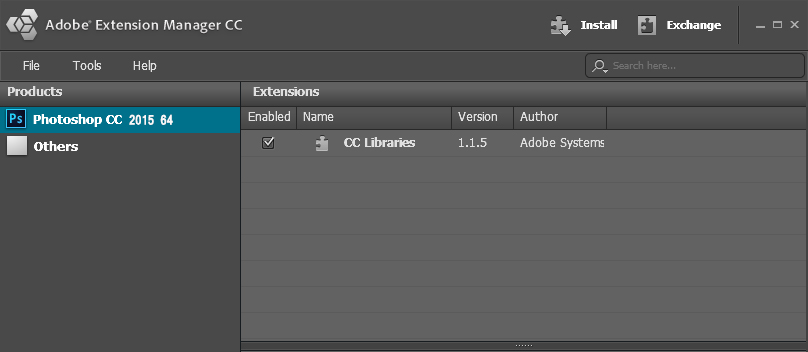
Extension Panels: Choose whether to allow Extension panels like Kuler to connect to the Internet for updates and new goodies. Also choose whether to have your Extension panels load when you start Photoshop.
The Type Preferences enable you to establish your font options as follows:
Use Smart Quotes: Smart quotes are the curly quotes that typographers use for quotation marks and apostrophes. Straight quotes should be used for abbreviations for feet and inches.
Show Text Engine Options: Photoshop shows either East Asian (European and Advanced East Asian languages) or Middle Eastern (European, Arabic, Hebrew) text options in the Character and Paragraph panels.
Enable Missing Glyph Protection: If certain glyphs (characters) are missing, Photoshop makes a substitution if this option is selected.
Show Font Names in English: Photoshop displays Asian font names in English if this option is selected (and you select the Show Asian Text Option).